
Are Arkansas Busted Mugshots Public?
Start with the office that holds the record. Under the Arkansas Freedom of Information Act, most adult booking records can be requested from that custodian. Other state law and any valid court order can shape what gets released. Nothing requires every sheriff to post booking photos online. County sites vary widely. Some show a current roster or a recent booking window, while others offer no photo feed at all. Others list only a few fields. A third-party page is never a full or current statewide record.
Four questions keep things straight. Is there an official booking record, does the jail post a photo, what did the court decide, and will a private publisher correct or remove a copy? Booking is the jail process that logs a person's arrival and custody details. A disposition is the court's recorded outcome. Check the docket and judgment for a dismissal, plea, acquittal, or conviction.
Two rules work side by side here. FOIA governs requests made to a public custodian. A separate statute targets private sites that charge money or other consideration to remove an Arkansas booking photo. Neither rule makes every online image official, current, or permanent.
Arkansas's Busted Mugshot Law
Act 450 of 2021 added Ark. Code Ann. § 4-75-102, titled "Private use of booking photograph." The law defines its terms with care. A booking photograph is an image taken by an arresting law-enforcement agency to identify a person during jail processing. A covered site is private. It must accept, request, or require payment or other consideration in exchange for removing the photo. Read the official Act 450 PDF or the current codified text of § 4-75-102.
A qualifying written request triggers real duties. The site must confirm receipt without charge and remove the photograph within five business days. The request needs the person's name and date of birth, the arrest date, and the arresting agency. Contact rules apply too. The home page must display the owner or operator's name, mailing address, email, and other contact information. Violations carry consequences. Civil remedies include compensatory damages, attorney fees, and possible punitive damages, and the Attorney General may investigate and bring an action.
The law is narrow by design. It regulates one business model: publish a booking photo, then charge to take it down. It does not ban all mugshots. It does not order counties to post arrest photos. It does not make every copy removable on demand. And it cannot guarantee that an image vanishes from search results. Provenance matters. A copy from an unnamed source, another state, or a news story may not qualify as an Arkansas booking photo taken during jail processing.
The bill passed in the 2021 regular session. It became Act 450, effective July 28, 2021. The Arkansas code still publishes § 4-75-102 today. Arkansas courts have not yet applied it in a reported decision. So edge cases stay unsettled.
Arkansas FOIA and Publication
Arkansas FOIA casts a wide net. Writings, photographs, recordings, video, and electronic material reflecting public business are public records unless an exemption applies. Any Arkansas citizen can ask the custodian to inspect or copy a specific existing file. The custodian is the office that keeps the record. The Attorney General's FOIA guidance walks through the broad definition and the usual three-business-day response rule. Answers vary. The office may produce the record, say none exists, claim an exemption, or lawfully seek delay or clarification. None of that promises a photo posted online.
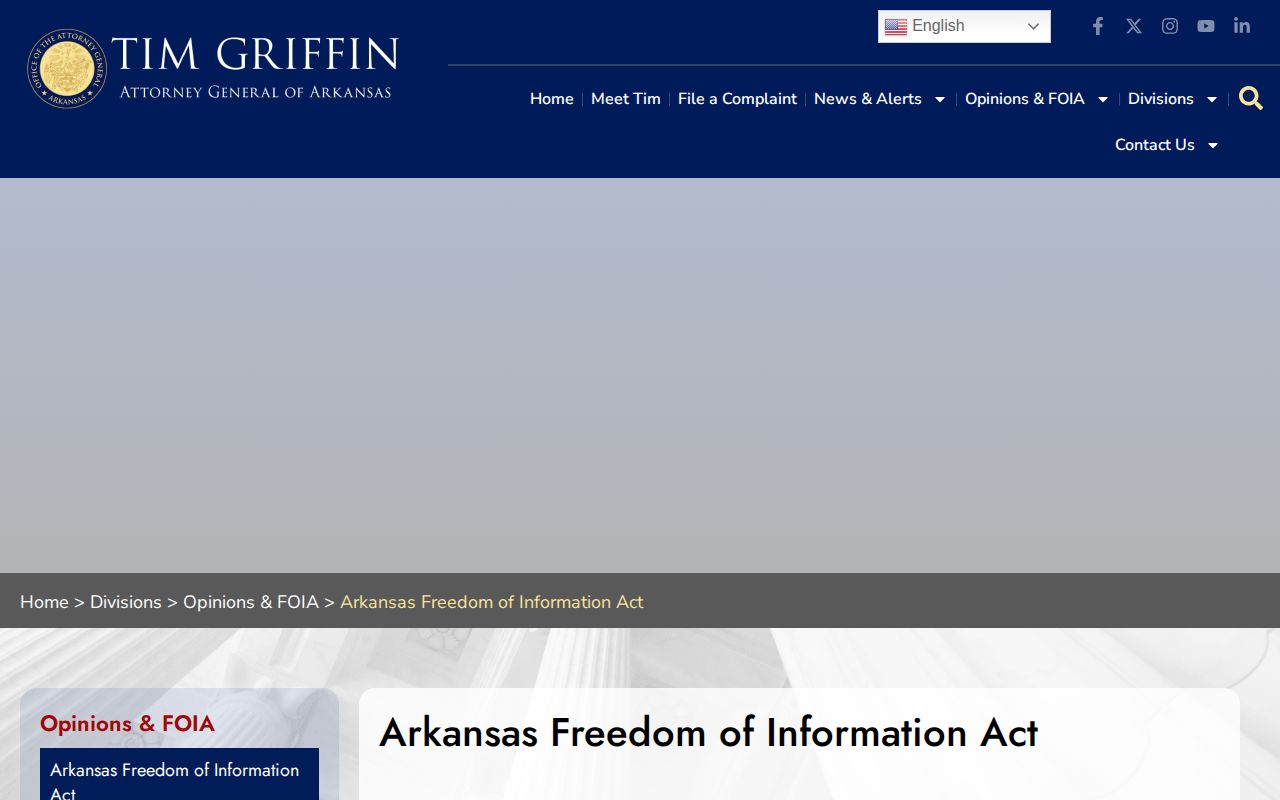
The Attorney General's page outlines public-record access and the request process. It is a legal guide. No roster and no booking photos live there.
Go straight to the holder. Contact the jail, sheriff, or arresting agency that keeps the record. Give enough detail to locate an existing file. Ask to inspect first, then name any copies; the office will not create a new report for you.
- Identify the county jail or arresting agency connected to the booking, rather than sending a general statewide query.
- Provide the person’s full name, date of birth if known, arrest or booking date range, agency, jail, and booking number if available.
- Name the exact items sought, such as the booking card, booking photograph, detention log, release record, or arrest report.
- Ask whether the record can be inspected or copied electronically. If the custodian withholds or redacts part, request the legal basis and any nonexempt portion.
A custodian who provides copies can bill for actual reproduction and mailing costs. Access can also slow down or stop. An active investigation may delay, limit, or bar release. So can a private identifier, a medical detail, a sealed case, or another controlling law. Arkansas FOIA materials lay out the exemptions. They also cover the release of nonexempt portions and the review route after a denial.
When Arkansas Booking Records Stay Closed
FOIA access has limits. A custodian can withhold or redact material for a listed reason. Harm to an active investigation qualifies. So does disclosure that would expose a confidential informant or victim. Revealing medical details, protected identifiers, or jail security weaknesses also counts. A record sealed or expunged by court order stays closed too. These are examples only. The FOIA handbook and the custodian's own explanation control the real answer.
Juvenile arrest, detention, and court records are generally confidential under Ark. Code Ann. § 9-27-309. Exceptions exist. One is a written juvenile-court order. Another is a qualifying formal felony charge in criminal division. Reports carrying personal identifiers from a juvenile detention facility get separate protection under § 9-28-217. A juvenile image can still surface in a search result. That does not make redistribution lawful. Do not copy or republish juvenile photos. Ask the appropriate court or custodian about lawful access instead.
Sealed records need care as well. A court order limits what officials may disclose. An old web copy or screenshot can linger with a publisher anyway. That stray copy says nothing about current legal status. Read the docket and signed order. That shows whether a case was dismissed, nolle prossed, acquitted, sealed, or resolved by a conviction.
When restricted information is at stake, ask the agency to name the specific exemption. It should also release any separable portion. A blanket claim that "mugshots are public" ignores the record-by-record limits Arkansas law recognizes.
Find Arkansas Busted Mugshots and Case Results
No photo on the roster? Move to the source that holds the next record. County jails and arresting agencies keep the booking material. Search ARCourts holds public case information, including docket events and judgments. ADC is the prison-custody search, not a county arrest index. The Arkansas statewide search page links to official county roster and request paths, while ADC mugshots and offender search covers the state-prison profile and institutional photo.
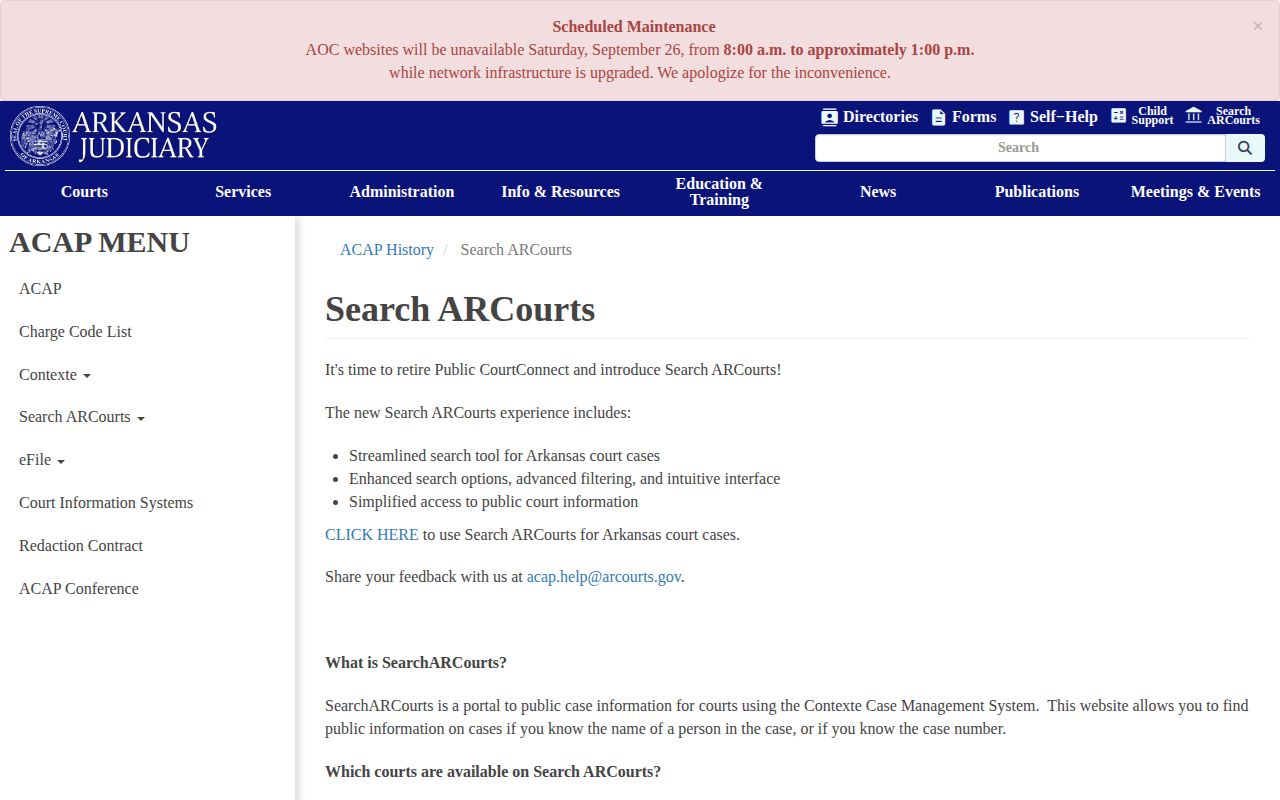
ARCourts is the court-system route. It carries public case details and dispositions. It can confirm an outcome. It cannot supply booking photos, and it is no substitute for the jail's own record. Search by a person's name or case number. Then read the docket and judgment rather than a booking charge or a publisher caption. CourtConnect covers courts where records are available, and restricted information stays subject to court rules. If no result appears, check spelling and case details, then contact the court clerk for that jurisdiction.
Note: A roster answers who an agency listed at a point in time; the court docket answers what happened to the case.
Why Arkansas Busted Mugshots Differ
Arkansas has no single statewide county-jail photo portal. County offices and their vendors use different systems and rules. One roster shows a photo with an in-custody entry. Another lists names and charges only. A feed may cover just a short booking or release window, and a photo missing online does not erase the official booking record.
Third-party pages add a layer. They copy records from county or agency sources and may cover only some counties. Old entries can linger after a live jail page changes. Coverage, image dates, and removal rules all vary. Treat them as a lead, then confirm the booking record with the agency and the outcome with the court, since a copied photo can be stale, mislabeled, or hard to trace.
For the official path, pick the county tied to the arrest and check its sheriff or jail roster first. Moved to state prison? Use the ADC search. Arkansas VINE handles custody notification, not photos, and is no statewide mugshot archive. Match the source to the record you want.
Seal or Expunge an Arkansas Record
Arkansas has several sealing and expungement routes rather than one general photo-erase request. Expungement is a statutory process. It generally limits public access to an eligible record. It does not physically erase every copy. The Arkansas Crime Information Center (ACIC) publishes forms for eligible felonies and misdemeanors, dismissals, nolle prosequi (a prosecutor's formal request to stop a case), acquittals, unfiled matters, arrests, pardons, and other programs. Most routes begin with a petition and a proposed order filed in the court that handled the case or sentence. The court or clerk sends the signed order to ACIC, which may take up to thirty days after receipt to update its record.
Eligibility turns on the offense, prior record, sentence completion, payment of required amounts, and any statutory exclusion. Under Ark. Code Ann. § 16-90-1406, some eligible nonviolent Class C or D felonies may be petitioned once sentence and obligations are complete. The waiting periods vary. Certain violent Class C or D offenses require five years after sentence completion. Many misdemeanors and violations have no wait at all. Completion and required payments must be done. Listed categories, including some DWI-related offenses, can carry extra conditions. Check the ACIC sealing forms and the current code for the exact charge.
A seal generally limits disclosure only. Ark. Code Ann. § 16-90-1416 lists who keeps authorized access. A pardon does not automatically remove each booking image. Get the court's signed order. Then confirm that the court, ACIC, jail, arresting agency, and other official custodians have updated the records they control. Each custodian controls its own copy.
A third-party copy is a separate matter. One court order rarely travels that far. It does not automatically reach an aggregator, news archive, social post, screenshot, cache, or search index. Send the publisher the exact page address plus the court order, with unneeded sensitive details redacted. Keep proof of delivery.
Arkansas Free Removal Paths
Go to the official record holder first. Then try the publisher's own correction route for any copy it controls. Section 4-75-102 offers a no-fee, five-business-day process when the photo and site fit the statute. A court order may work too. So can an agency correction or a voluntary publisher policy. None of these is automatic. It will not delete every image online.
| Route | When it may help | What to expect |
|---|---|---|
| Arkansas § 4-75-102 request | A covered private site displays a booking image taken by Arkansas law enforcement and seeks payment or other consideration for removal. | Send the required written identifying details. A qualifying image must be removed without charge within five business days; keep proof the request was received. |
| Official custodian or court | The original roster, booking record, or case status is inaccurate, restricted, sealed, expunged, or no longer eligible for public access. | Send a specific correction or signed court order to the jail, arresting agency, court, or other official custodian that controls the record. |
| Publisher’s free policy | A secondary page meets that publisher’s listed criteria, such as a wrong person, duplicate, sealed or expunged case, or favorable disposition. | Follow the publisher’s form and provide the exact post URL and the minimum supporting documents requested; each site sets its own review process. |
| Search-index refresh | The source page has already changed or disappeared but an old search result still points to it. | Use Google’s outdated-content tool to ask for a refresh. That step does not remove the source record or decide the case. |
Busted Newspaper's removal form asks for the person's name, contact details, exact post URL, reason, and supporting legal documents. It lists outcomes such as expungement, dismissal, nolle prosequi, not guilty, or sealing. The review estimate runs five to ten days. That is the publisher's process, separate from the statute.
RecentlyBooked's removal policy charges no fee. Qualifying cases involve a dismissal, expungement, sealing, inaccuracy, wrong person, juvenile material, or a duplicate. Requests need the record URL, full name, arrest date, county or state, and the reason. Supporting papers go with it. The policy does not promise removal of every accurate, current official record.
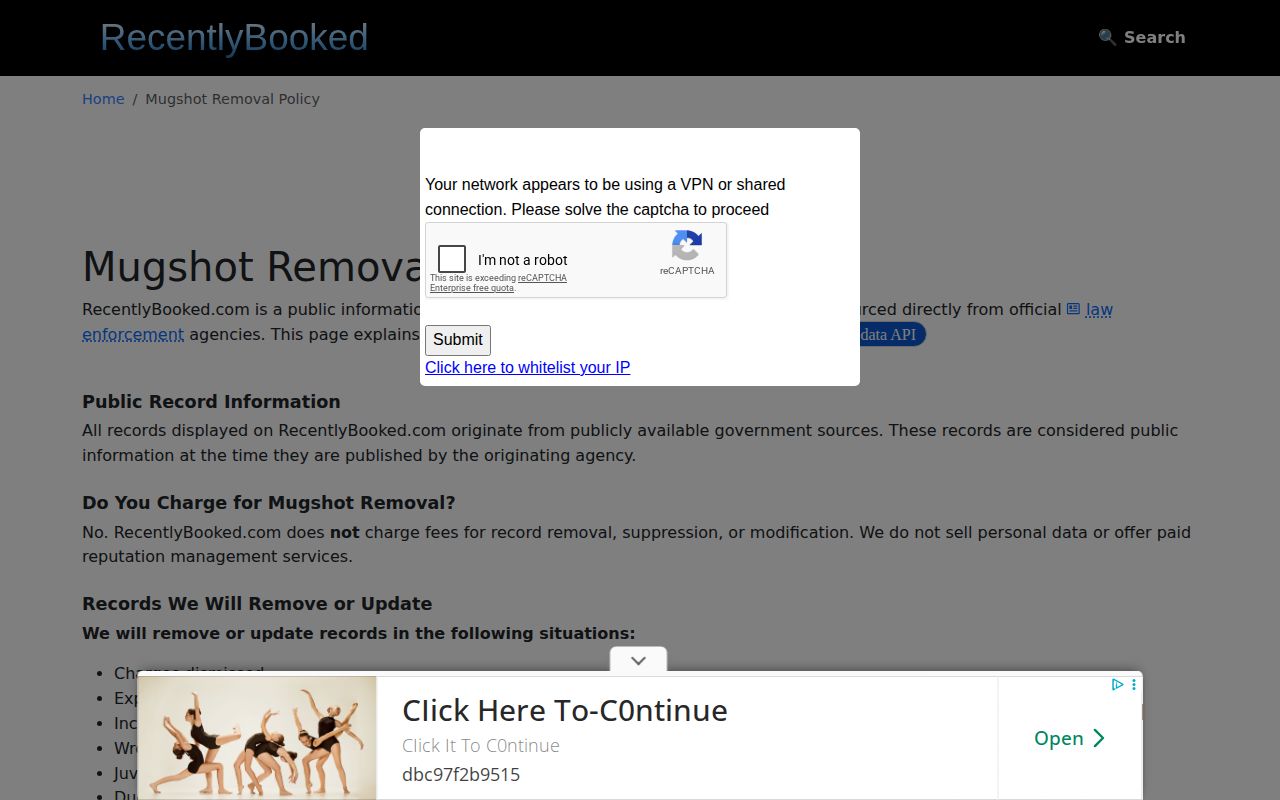
The publisher's page lays out its free review route. It gives examples of records it may correct or remove. It is a publisher policy, not an agency decision. Mugshots.com charges nothing either. Its record-maintenance policy describes requests for sealing, expungement, record restriction, identity theft, or death. Signed court records are required. Processing can run up to ten business days, and removal is not guaranteed. The site may update a favorable disposition rather than remove the whole record.
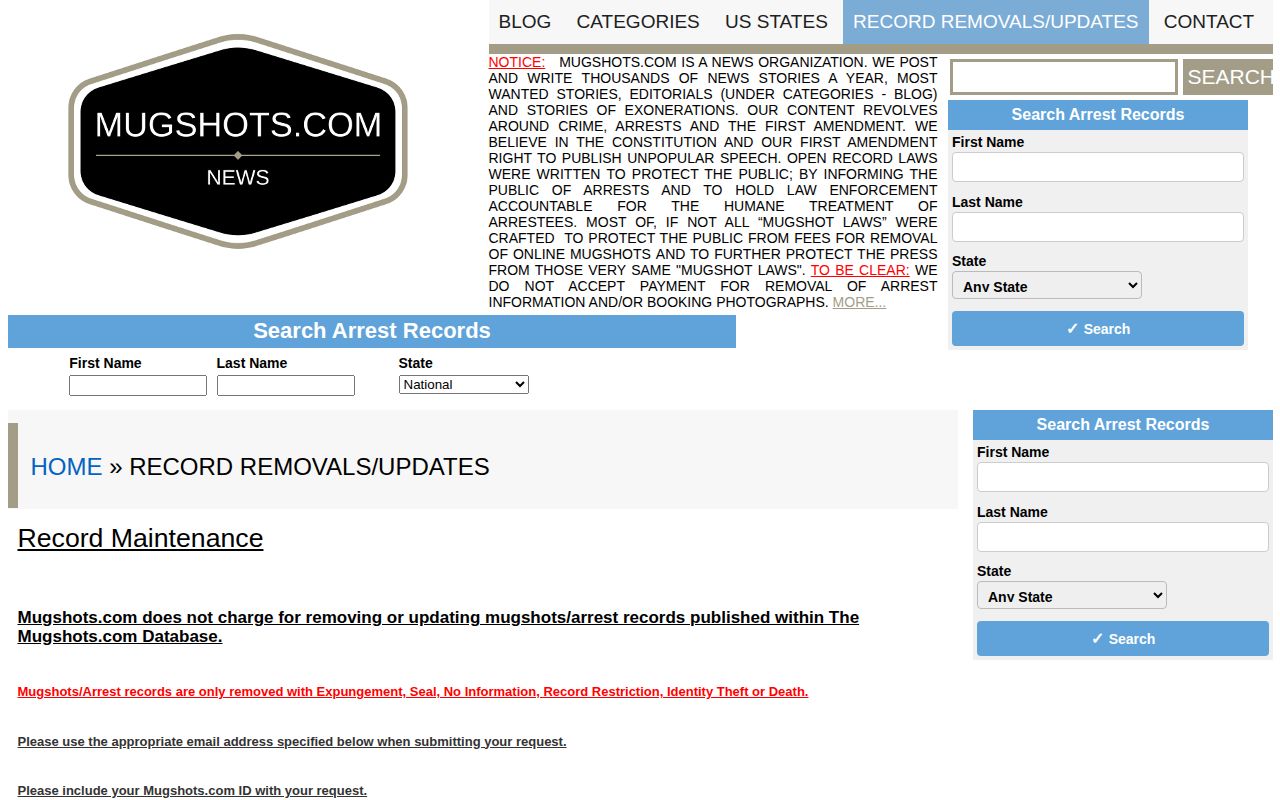
That page summarizes one publisher's process. It is not an official Arkansas removal order. Nor is it a promise that every image gets deleted. Beware anyone demanding money for a guaranteed statewide wipe. The statute itself supplies a free route for qualifying photos on covered sites. No middleman can stretch a limited Arkansas law, or a publisher's policy, into a command that every copy vanish.
How Long Arkansas Records Last
Arkansas law sets a floor for jail booking records. County booking photographs and detention logs must be kept at least five years under Ark. Code Ann. § 13-4-404. After that minimum, disposal is allowed through a county-judge and sheriff process. No statute forces a sheriff to keep an image posted on a website. Nor must photos join a statewide archive. A roster entry can vanish quickly. A released person's name may drop off long before the official booking record is eligible for destruction.
Records over fifty years old follow a different rule. A State Archives notice comes first. After notice, the county may retain the record, transfer it, microfilm it, or destroy it under an approved schedule; no statewide catalog is known to hold every county mugshot book. Start with the original sheriff or jail. Ask about the retention and transfer record. Then ask the Arkansas State Archives preservation program whether a transfer or notice exists. The Archives can help locate historic materials, but cannot promise that an individual booking photo survived.
Note: A disappearing online roster is not proof that a booking record was destroyed or sent to the State Archives.